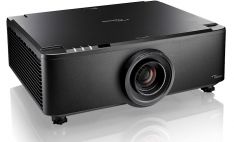
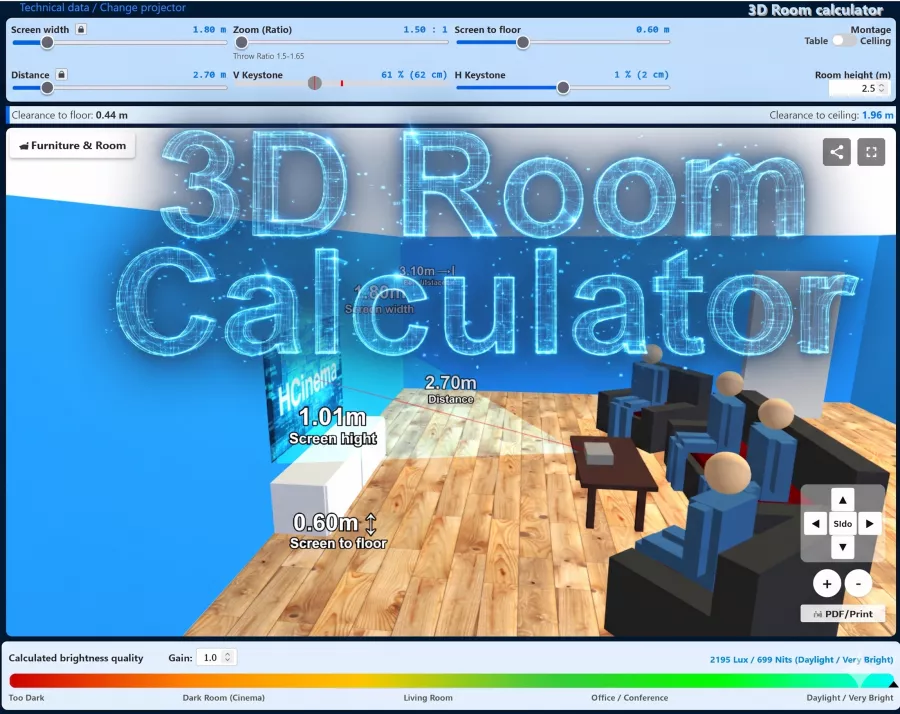
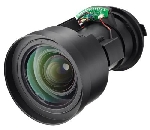
Known as the PA804UL, this 3D-LCD projector by Nec features basic specs of 7500 ANSI lumens, a contrast of 3000000:1 at a WUXGA 1920 x 1200 resolution. This is a laser projector with a light source designed to last for 20000 hours – calculating to 13.7 years at four hours of use per day. Regarding setup flexibility, the model features an optical lens shift function alongside digital keystone correction, allowing for precise alignment without distortion. Thanks to the interchangeable lens system, the device can be equipped with optional lenses to react flexibly to different room sizes. Exact values for specific rooms are provided by the Projector Calculator. Looking at practical performance, up to 880 cm can be illuminated with 7500 ANSI lumens in dark environments. Once daylight is in the room, the image should ideally be no wider than 587 cm. Should very large projection surfaces be required, the integrated edge-blending software offers the possibility to seamlessly combine images from multiple projectors without visible seams. In terms of video signals, the device processes resolutions up to Full HD 1080P as well as 3D. Furthermore, the model supports 360° projections for highly flexible deployment scenarios. The model is perfectly equipped for complex installations: In addition to the RJ45 jack for network administration, an HDBaseT port is available, transporting high-resolution AV signals over a single Cat cable. A look at the data sheet confirms a very subtle fan noise for the projector at just 30 decibels.
Display Type
3 x LCD TFT Panel WUXGA 16/9 Liquid Crystal Display
Stationary | Permanent installation in the training room and meeting room as well as the conference room. Very large screen width and rooms with plenty of light and shaded daylight.
Real Full HD 3D Full HD 1080P compatible Direkt Power Off Lens shift Funktion Freeze Eco Mode Kensington Slot High Dynamic Range (HDR) 360° installable Edge Blending PJLink™ Control via web browser Lan network compatible. Crestron®-Software compatible. Picture-by-Picture Picture-in-Picture DICOM Simulation















 Real Full HD 3D



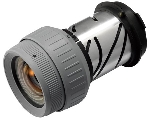
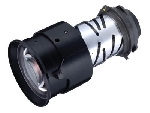
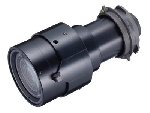


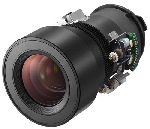

 Nec Website
 Product Sheet english